Scaling Smart Sewers X10
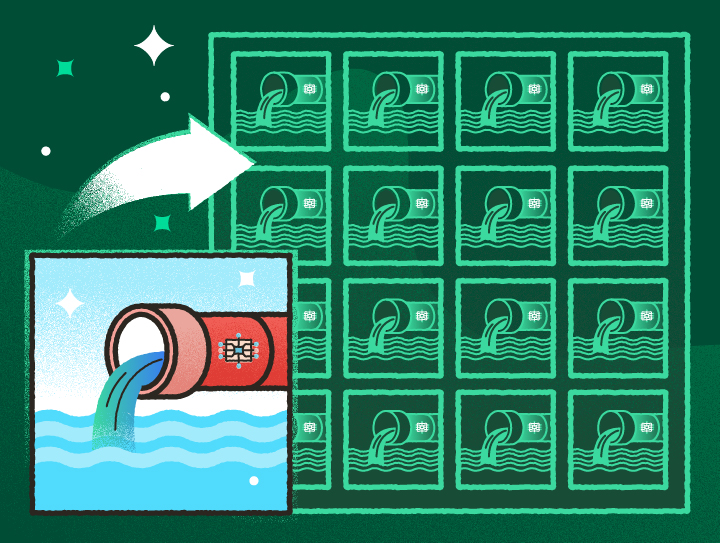
How do we move from isolated smart sewer deployments to region-wide intelligence capable of reducing overflow impacts by 10x across 10x more catchments?
Smart sewer networks are already proving their value - using sensors, AI, and digital twins to predict and prevent storm overflow events. But to meet environmental expectations and regulatory demands, we need to go further and faster.
The challenge now is not just innovation - but scale, integration, and collaboration.
Building on NWG’s and HydroDigital’s flagship smart sewer programme, this sprint will explore how we move from successful single-catchment pilots to system-wide transformation through a blend of new ideas and thinking outside the box.
Together, how might we:
- Identify how best to scale smart network technologies (e.g. AI, new sensor technology, digital twins and other complimentary interventions) across wider geographies
- Explore the use of real-time triage and decision support tools which can further reduce spill numbers in many catchments at scale
- Define how best to integrate smart sewers with e.g. rainwater management, catchment planning, and wider infrastructure systems
- Consider the role of regulatory collaboration and external stakeholders in enabling faster adoption
- Identify technologies and develop concepts to accelerate deployment, reduce cost, and maximise environmental impact
Participants will work through a series of collaborative sessions to:
- Review the current smart sewer programme—including sensor deployment, digital twin capabilities, and operational successes
- Map opportunities and new ideas to enhance real-time control and predictive decision-making
- Co-design the next-generation of tools and control environments (e.g. control rooms, automation, field integration)
- Identify barriers to scaling—technical, regulatory, operational—and develop solutions
- Explore partnerships across utilities, local authorities, highways, and environmental stakeholders
- Identify ways to ensure we coordinate and integrate solutions which can drive maximum benefit and avoid ‘solution’ siloes
By the end of the sprint, we aim to deliver:
- An implementatable roadmap for achieving a 10x reduction in storm overflow events in 10x more catchments
- Concepts and ideas for scaling smart networks efficiently across NWG regions and beyond
- Defined opportunities for e.g. enhanced use of AI, new sensor technology, and digital twin integration
- Recommendations for cross-sector collaboration and regulatory alignment
- A vision for the future of smart sewer operations, including control, monitoring, and response
- Operational and network teams, with enhanced tools for proactive management
- Technology innovators, with the capability of scaling cutting-edge technology into real-world impact
- Regulators and partners, through improved environmental outcomes and transparency
- Local communities, benefiting from reduced pollution and improved water quality
- The environment, through significantly fewer storm overflow events